I. Basic Description & Applicable Standards
FATECH mechanical lightning strike counter, models FLRC-S/II and FLRC-S/R, adopt an electromagnetic induction coil paired with a mechanical gear counting mechanism to record lightning strike events. Containing no electronic components or batteries, they are widely used in conjunction with lightning rods, down conductors and other lightning protection devices.
1. Applicable Standards
1). National Standards of China: GB/T 33588.6 Components of Lightning Protection Systems – Part 6: Lightning Strike Counters DL/T 474.5 Field Test Guide for Surge Arresters
2). International Standard: IEC 62561-6 Standard test waveform: 8/20 μs impulse current (simulating direct lightning strikes and induced lightning surges)
2. Test Purposes
1).Verify the triggering sensitivity of the electromagnetic coil and check for rust, mechanical jamming or wire breakage;
2).Validate the accuracy of the mechanical gear counting mechanism, ensuring the reading increments by exactly 1 per impulse;
3).Evaluate long-term operational reliability under repeated actuation.
II. Factory Routine Test Items for FATECH Mechanical Lightning Strike Counters FLRC-S/II and FLRC-S/R
1. Test Equipment
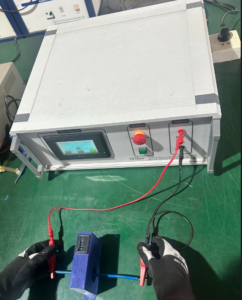
1) FATECH self-developed portable surge counter tester Model FPT15-I or FPT15-IL (outputs standard 8/20 μs, 2.5 kA impulse current),
2) grounding cables,
3) insulated clamps and insulating gloves.
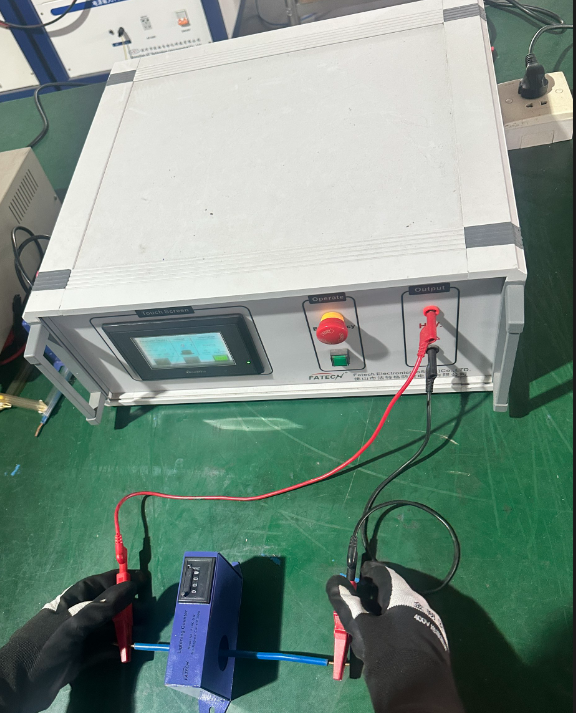
2. Operating Procedures
1).Power on the calibrator for preheating, then set standard parameters: 8/20 μs waveform with a peak value of 2.5 kA;
2).The FLRC-S/R model is equipped with a manual reset function – reset the counter to zero before testing. The FLRC-S/II model has no reset function, so record its initial reading first;
3).After the calibrator completes automatic charging and stabilizes, trigger the first impulse;
D.Observe the mechanical digit wheel: it must advance fully by one digit without jamming, half-advance or failure to actuate;
4).Wait a minmum interval of 30 seconds between impulses, then apply 3 to 5 consecutive impulses, confirming the reading increases sequentially each time;
5).Upon completion of all tests, the calibrator automatically discharges and reduces voltage before disconnecting all test leads;
6).Document the number of test impulses and actuation status for each cycle, then judge whether the unit passes or fails the test.
3. Fault Judgment & Remedial Measures
Units exhibiting any of the following conditions are deemed non-compliant and require repair or replacement:
1).No digit advance upon application of standard impulse: caused by broken coil wire, seized internal gears or corroded permanent magnets;
2).Stuttering, half-digit advance or intermittent missed counts: caused by dust buildup on gears, moisture-induced corrosion or fatigue of drive springs.
III. Additional Tests Performed on FATECH FLRC-S/II and FLRC-S/R Mechanical Lightning Strike Counters
Apart from the impulse actuation test, the following performance tests are also implemented:
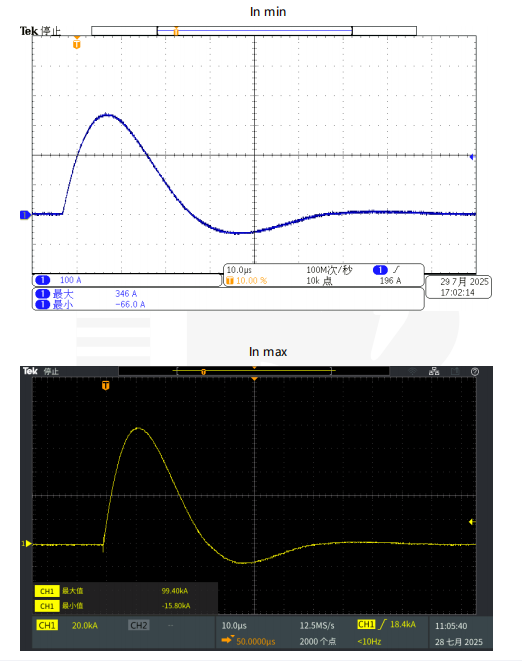
1.Operating Threshold Test Gradually reduce the impulse current from high to low and record the minimum current required for counter actuation. The standard actuation range for mechanical counters under 8/20 μs waveform is 300 A to 100 kA; the counter shall not actuate when the current falls below the threshold.
2.Cyclic Durability Test Apply 1,000 consecutive standard impulses. Verify the reading every 100 impulses. After the test cycle, disassemble the unit for inspection to confirm no gear wear or coil solder detachment.
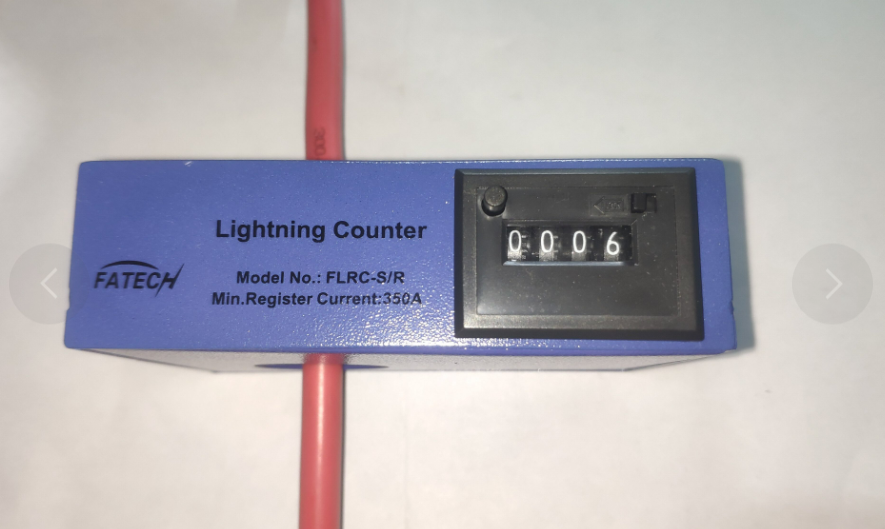
3.Cyclic Durability Test Apply 1,000 consecutive standard impulses. Verify the reading every 100 impulses. After the test cycle, disassemble the unit for inspection to confirm no gear wear or coil solder detachment.
4.High-Low Temperature Environmental Test After cycling between -40 °C and +70 °C, perform an immediate impulse test. The mechanical gears shall not seize at low temperatures, and the electromagnetic coil shall not malfunction at high temperatures.
5.Waterproof Protection Test (IP67) After spray and immersion testing to IP67 standards, wipe the unit dry and re-conduct impulse calibration. No internal water ingress or corrosion shall occur, and counting function shall remain normal.
FATECH strictly implements all the above test specifications to guarantee accurate counting of its mechanical lightning strike counters and stable, reliable operation of supporting lightning protection systems.